April 2, 2026
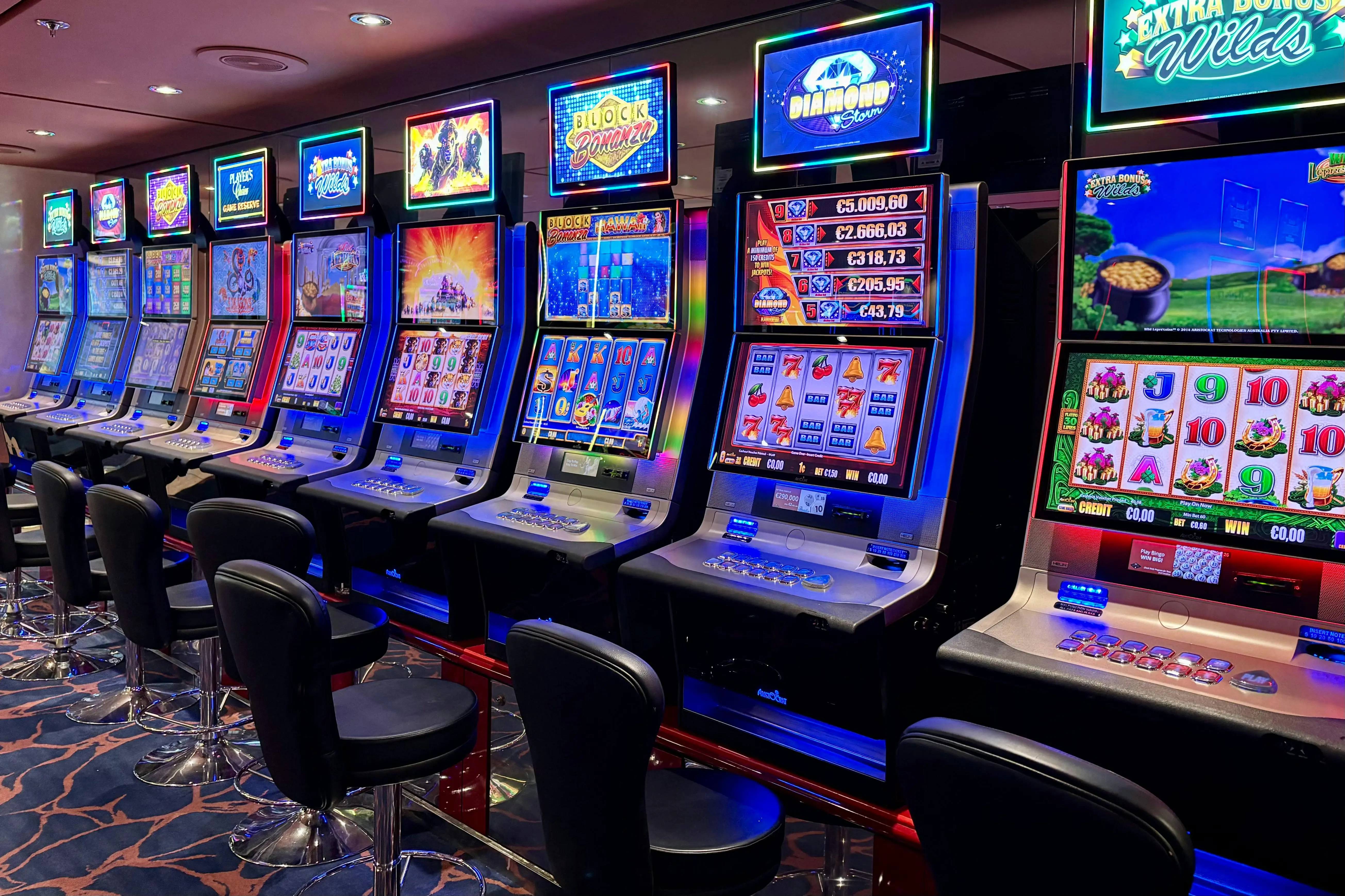
At first glance, most slot machine designs seem interchangeable. The symbols change, the themes rotate from ancient Egypt to Norse mythology to branded IP, but the experience underneath stays stubbornly familiar. Same reel structure. Same tension arc. Same win animation logic.
This isn’t a failure of imagination. It’s the predictable outcome of rational design decisions made at scale — and understanding why it happens is the first step toward doing something about it. In this article, we’ll break down why slot machine design converges toward sameness and what it actually takes to build something that feels distinct.
The Intentional Architecture of Sameness
The core loop of a slot game — spin, resolve, react, repeat — has remained structurally unchanged for decades. That’s not inertia. It’s optimization.
Familiarity is doing real work in slot machine graphics. When a player opens a new title, they bring expectations shaped by every slot they’ve played before: what counts as a win, how symbols rank, what a bonus trigger looks and sounds like. Designs that honor those expectations reduce friction and accelerate engagement. The faster a player understands what’s happening on screen, the sooner they’re in the emotional state the game was built to produce.
There’s also a business logic that reinforces this. Core mechanics are thoroughly tested, reliably compliant with regulatory requirements across jurisdictions, and optimized for known retention behaviors. Changing them isn’t just creatively risky — it’s commercially expensive. Every deviation from convention is a hypothesis that needs proving.
Data-driven development compounds this further. Analytics surface the patterns that retain players and eliminate the ones that don’t. Over a long enough time horizon, this process converges: the industry ends up with a portfolio of titles that are individually optimized but collectively indistinct.
Then there’s nostalgia, which is more powerful in this category than designers often acknowledge. A meaningful segment of slot players aren’t looking for novelty — they want the cognitive comfort of a familiar experience, the same way someone orders the same coffee every morning. For this audience, deviation isn’t innovation; it’s friction.
All of which means that most slot games feel the same because they were designed that way, by rational people making defensible decisions.

The Real Cost of Convergence
Sameness isn’t inherently a problem at the product level in a casino game design until it becomes one at the portfolio level.
When every title in a studio’s catalog plays on the same emotional register, launches blend together in the market. Player acquisition costs rise as differentiation drops. New titles cannibalize existing ones rather than expanding the audience. And the lifecycle of each release shortens, because nothing gives players a reason to stay.
The studios that have broken through — think of how Gonzo’s Quest redefined reel animation with its avalanche mechanic, or how slot games with genuine progression systems started attracting players who had never engaged with the category before — did so not by adding more symbols or more reels, but by changing what the experience felt like at a deeper level.
That’s the gap worth designing into.
What Differentiation Actually Requires
Breaking the sameness pattern doesn’t mean abandoning accessible mechanics. It means being more deliberate about the layer of experience that sits on top of them.
Start with emotional intent, not theme
The standard design brief begins with a theme — Viking slot, dragon slot, branded property — and works forward from there. The problem is that themes are cosmetic, and cosmetic differentiation is exactly what produces the reskin problem. A more effective starting point is an emotional question: what should this player feel, and when? Chaos and overstimulation? Mounting tension with a cathartic release? Calm progression? The answer should drive every decision that follows — pacing, color palette, animation timing, audio design — rather than being retrofitted onto a pre-selected theme.
Use visual design to create hierarchy, not decoration
In the majority of slot games, everything on screen competes for attention simultaneously. Strong visual design does the opposite: it uses contrast, motion, and lighting to direct focus toward what matters and suppress what doesn’t. This isn’t a matter of production budget — it’s a matter of intent. A single well-chosen focal point, animated with purpose, communicates more than a screen full of simultaneous activity.
Treat sound as architecture, not atmosphere
Audio in most slot games is functional at best — it marks wins, fills silence, and occasionally loops a theme. The opportunity is significantly larger. Dynamic soundscapes that shift with game state, audio feedback that makes near-misses feel meaningfully different from dead spins, music that evolves across a session rather than cycling every 90 seconds — these are not production luxuries. They are the difference between a game that feels alive and one that feels mechanical.
Build worlds, not just themes
Themes and worlds are not the same thing. A theme is a visual style applied to a familiar structure. A world has internal logic — visual, sonic, narrative — that makes every element feel like it belongs to the same place. Even in a format defined by short sessions, coherence creates memorability. Players may not consciously articulate what they notice, but they register whether a game feels complete or assembled.
Segment more precisely, design more boldly
The instinct to design for the broadest possible audience produces the most generic possible product. Nostalgia-driven players, feature-seekers, visual-first casual players, and session-length maximizers have genuinely different needs — and a game that tries to satisfy all of them often satisfies none of them particularly well. Accepting a narrower target audience in exchange for a stronger experience is a trade that more studios should be willing to make.
The Question Studios Should Be Asking
In a mature, saturated modern slot machine market, the differentiating question has shifted. It’s no longer “what does this game look like?” — every studio has competent art production. It’s not even “what features does this game have?” — the feature space has been thoroughly explored.
The question is: what does this player feel, and how quickly do they feel it?
The studios building durable catalog titles and genuine word-of-mouth are the ones that have internalized this. They’re designing emotional systems first and themes second, treating sound and motion as primary tools rather than finishing touches, and being willing to optimize for a specific player rather than a universal one.
The mechanics can stay familiar. The experience doesn’t have to.
Final Thoughts
Slot machine graphic design is at an inflection point. The formulas that built the industry still work — but they work for everyone, which means they differentiate no one. In a market where players have more choices than ever, the studios pulling ahead aren’t the ones adding more features or more reels. They’re the ones being more intentional about what their games feel like from the first second to the last spin.
The good news is that standing out doesn’t require reinventing the category. It requires clarity — about your audience, your emotional intent, and how every visual and audio decision serves both. Whether you’re launching an original IP or breathing new life into familiar slot machine patterns, the lever is the same: deliberate design over default design.At Inkration, we help studios and operators develop slot games that go beyond the expected — from original concept and full game development to focused art production and reskins that actually feel fresh. If your next title deserves more than a template, let’s talk.
More Article