June 11, 2026

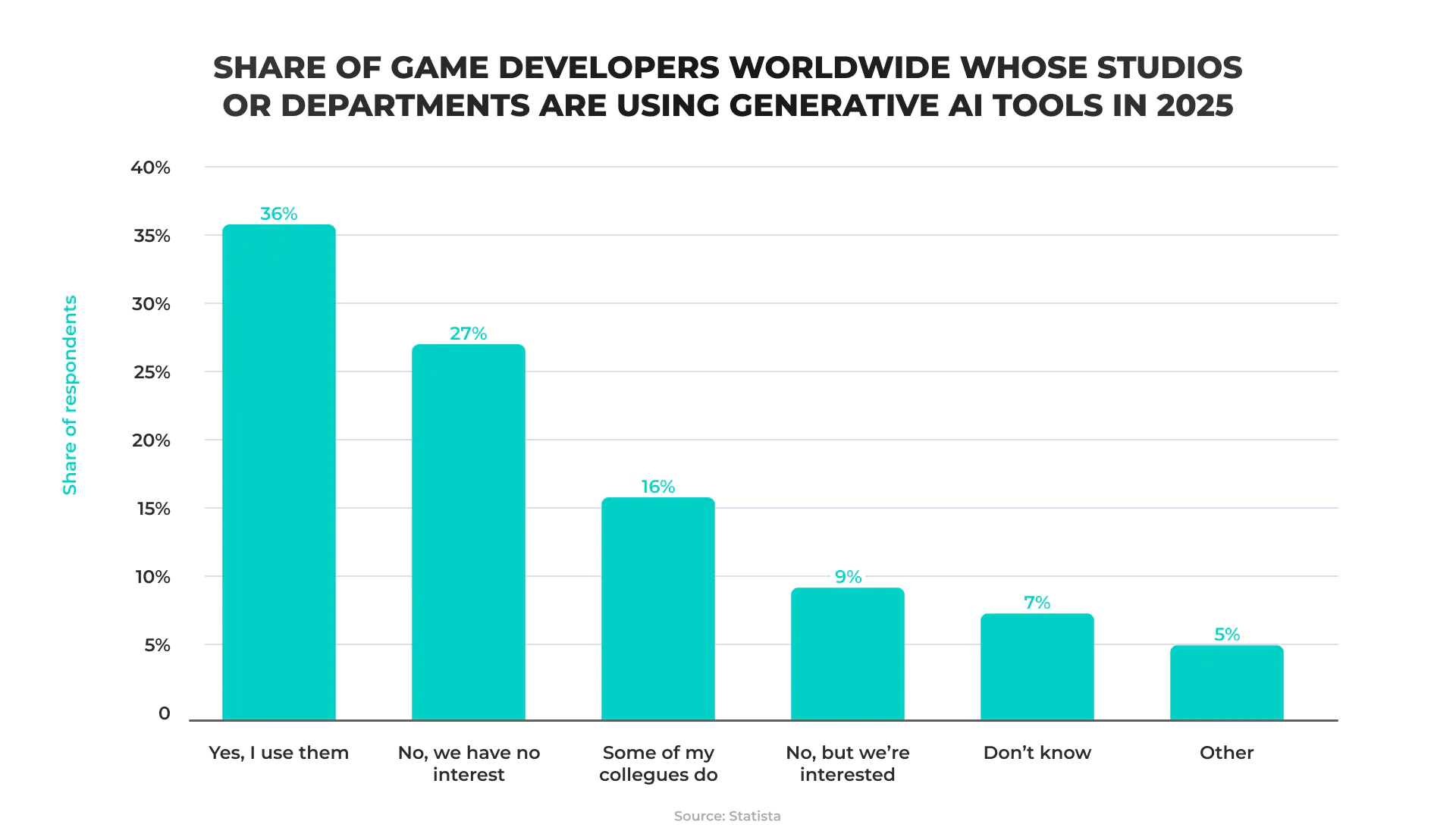
Artificial intelligence has been shaping online gambling for years — fraud detection, player analytics, recommendation engines. None of that is new. What is new is generative AI: systems that don’t just analyze data but create content, generate responses, model player behavior, and support decisions at scale. That’s a fundamentally different capability, and the iGaming industry is starting to figure out what to do with it.
Today, AI in iGaming is no longer limited to backend analytics. As competition intensifies across online casinos, sportsbooks, and gaming platforms, AI — particularly generative AI — is becoming one of the more practical answers to that pressure, and iGaming AI solutions now touch everything from marketing efficiency to platform security to responsible gaming compliance. It’s also one of the defining iGaming technology trends operators are actively building around, not just watching.
This article explores how generative AI can be used in iGaming, where it delivers the most value today, and what operators should consider before integrating AI into their platforms.
How Generative AI Is Changing the iGaming Industry
The iGaming sector has always moved fast on technology adoption — mobile, live dealer, cloud infrastructure, real-time analytics. Generative AI follows that pattern, but the scope of impact is wider than previous waves. Prior automation tools optimized existing processes; generative AI can create new outputs entirely. AI in online casinos specifically is moving from back-end risk management into player-facing experience layers — personalized content, adaptive interfaces, real-time support — which is where competitive differentiation actually happens.
The business case is straightforward. Player acquisition is expensive and getting more so. Retention depends on relevance — players who feel like a platform understands their preferences stick around longer. Content production is a constant bottleneck for operators running multiple brands and markets. Compliance workloads keep growing. AI in online gambling addresses each of these pressure points directly, and it’s driving a wave of gaming industry innovation that has moved from experimental to strategic across most major operators.
6 Ways Generative AI Can Be Used in iGaming
Personalized Player Experiences
Personalization is probably the clearest use case for generative AI in iGaming, and also the one with the most direct revenue impact. Players have always responded better to experiences that feel built for them — the challenge historically was doing that at scale without a massive manual operation behind it.
Modern AI systems solve that by analyzing behavioral signals continuously: what games a player engages with, when they play, how they respond to different bonus structures, where they drop off. From that, the system generates personalized game recommendations, tailored promotions, adaptive onboarding flows, and individualized loyalty rewards — dynamically, in real time, without a human having to segment and configure each campaign manually.
The practical upside isn’t just engagement. Real-time personalization means a platform can adjust its approach mid-session based on what a player is actually doing, which creates meaningfully better conversion opportunities than static segmentation built on last month’s data.
Dynamic Content Generation
Running multiple brands, markets, and campaign cycles creates a content production problem that scales faster than headcount. Marketing teams end up spending time on repetitive, low-complexity work — writing variant copy for email campaigns, localizing promotional material, generating game descriptions, producing push notification sequences — that AI handles well.
Generative AI tools can take a brief and produce promotional copy, landing page variants, CRM emails, and social content at a pace no in-house team can match. For operators in multiple regulated markets, localization support is particularly valuable — adapting content for language and regional compliance requirements without building separate teams for each jurisdiction.
For game studios specifically, AI is also starting to contribute earlier in development: concept exploration, thematic ideation, visual reference generation. Human creative oversight remains essential, but AI reduces the time from brief to workable direction considerably.
Advanced Security and Fraud Detection
Online gambling platforms are attractive targets — high transaction volume, real-money accounts, and a large surface area for abuse. AI-powered security systems work by monitoring transactions, login behavior, gameplay patterns, and session data simultaneously, flagging anomalies that static rule-based systems would miss or catch too late.
The practical applications run from account takeover detection and bonus abuse identification to payment fraud monitoring and AML risk flagging. What makes machine learning-based fraud detection systems meaningfully better than legacy rule sets is adaptability — models learn from new attack patterns rather than waiting for rule updates. That matters in an environment where fraud methods evolve constantly. A well-tuned AI security system also reduces false positives, which is underrated: legitimate players getting incorrectly flagged is a real retention and trust problem.
Responsible Gaming Initiatives
Responsible gambling tools have historically been reactive — cooling-off periods and deposit limits applied after a player requests them. AI enables a more proactive approach by identifying behavioral patterns that correlate with gambling harm before a player reaches a crisis point.
Sudden increases in session length, spending spikes outside normal patterns, chasing behavior after losses — these signals are detectable at scale using predictive models. When the system identifies them, it can trigger automated interventions: messaging, limit suggestions, support referrals. Generative AI adds another layer here by making those communications personalized and contextually appropriate rather than generic warnings that most players ignore.
For operators in regulated markets, this isn’t just good practice — it’s increasingly a compliance requirement, and demonstrating a proactive AI-assisted responsible gaming framework is becoming a real differentiator in licensing conversations.
Enhanced Customer Support with AI Chatbots
First-line customer support is one of the highest-volume, most repetitive operational costs in iGaming. Account inquiries, deposit questions, bonus status, verification processes, withdrawal updates — the majority of support tickets are variations on a short list of issues. AI-powered chatbots handle this category well, and modern generative AI systems do it with enough natural language capability that the interaction doesn’t feel like fighting a menu system.
The operational model most operators are converging on is hybrid: AI handles first-line interactions, resolves the majority of tickets without escalation, and routes the complex or sensitive cases — disputes, suspected problem gambling, regulatory complaints — to human agents who can actually address them properly. This cuts support costs while improving response time, and it means human agents are spending their time on work that actually requires judgment.
AI-Powered Marketing and Player Retention
Marketing spend in iGaming is substantial, and a lot of it has historically been undifferentiated — broad bonus offers sent to segments that were really just “people who played last month.” Predictive analytics changes that.
AI-driven player retention strategies work by identifying which players are actually at churn risk, what kind of offer they’re most likely to respond to, which game categories they’re drifting toward, and when the optimal moment to reach them is. That level of specificity means marketing budgets go further — fewer campaigns, better targeting, higher conversion. The data-driven decision-making model also makes it possible to test and iterate quickly rather than running month-long campaigns on gut instinct. Combined with dynamic content generation, operators can run genuinely personalized retention programs at a scale that would otherwise require enormous manual infrastructure.
Advantages of Generative AI in the iGaming Industry
Immersive, Relevant Gaming Experiences
The combination of behavioral analytics, real-time personalization, and content generation creates AI powered gaming experiences that are meaningfully different from what was possible even five years ago. For generative AI for casino operators, this is the clearest ROI argument: players aren’t just getting recommendations — they’re getting an experience that adapts to how they actually use the platform, which is what “engagement” actually means in practice.
Scalable Operations Without Linear Cost Increases
As platforms grow, the traditional approach — add headcount to match volume — breaks down. AI provides a path to scaling player interactions, content production, and support operations without proportional cost increases. For operators expanding into new markets or managing multiple brands, that scalability is one of the most commercially compelling aspects of AI investment.
Faster, Better Content Production
Content requirements in iGaming compound quickly across marketing, CRM, compliance documentation, and game production. Generative AI doesn’t replace creative teams — it removes the bottleneck work that slows them down, so specialists can focus on strategy and quality rather than volume.
Challenges of Generative AI in iGaming
Starting Without a Clear Strategy
The most common way to waste an AI budget is to adopt tools before defining what problem they’re solving. Successful AI implementation in iGaming starts with a specific business objective — reduce support ticket volume by X%, improve retention rate in this cohort, cut content production time — and works backward to the tooling. Organizations that skip this step end up with fragmented initiatives that can’t be scaled or measured.
Integration Into Complex Tech Stacks
Most iGaming operators are running layered infrastructure — CRM platforms, payment processors, gaming engines, compliance tools, analytics systems — that wasn’t designed with AI integration in mind. Connecting new AI capabilities to existing systems requires real technical planning around compatibility, data pipelines, and performance. Data quality is often the constraint: AI systems produce output as good as the data feeding them, and many operators have messier data infrastructure than they realize until they try to use it.
Regulatory and Ethical Compliance
The online gambling industry operates under strict and jurisdiction-specific regulatory frameworks. Any AI implementation that touches player data, decision-making, or communications needs to be evaluated against GDPR requirements, responsible gaming obligations, AML procedures, and local consumer protection rules. Bias in AI models — particularly in anything affecting player communications or support — is also a legitimate concern that requires ongoing monitoring, not just a one-time audit. Organizations that treat compliance as an afterthought in AI deployment are setting themselves up for expensive problems.
Keeping Up With a Moving Target
AI capabilities are evolving fast enough that planning cycles are genuinely difficult. Tools and models that represent best practice today may be superseded in 18 months. Operators need flexibility in their architecture and vendor relationships to avoid overcommitting to approaches that age poorly.
The Future of AI in iGaming
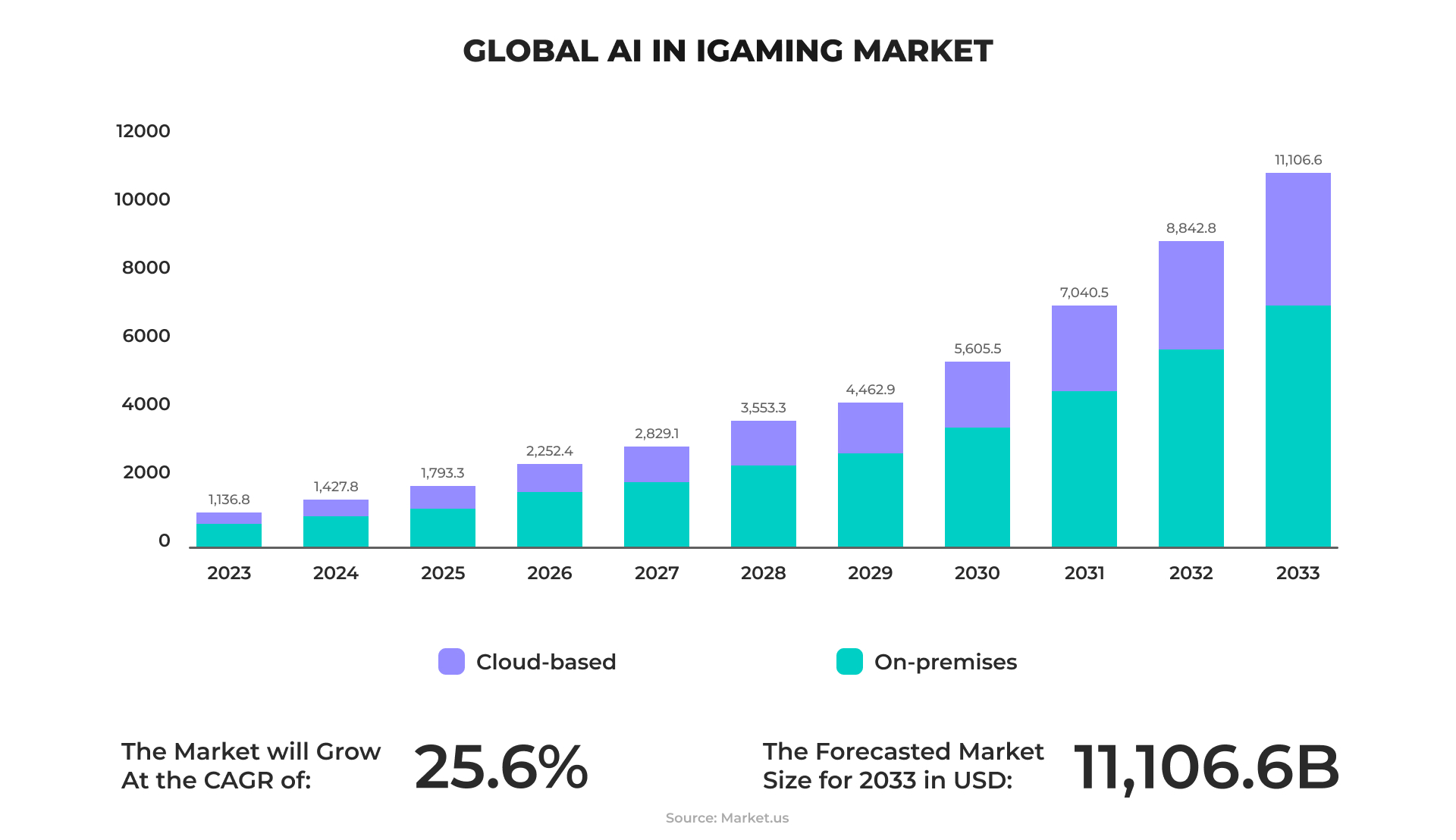
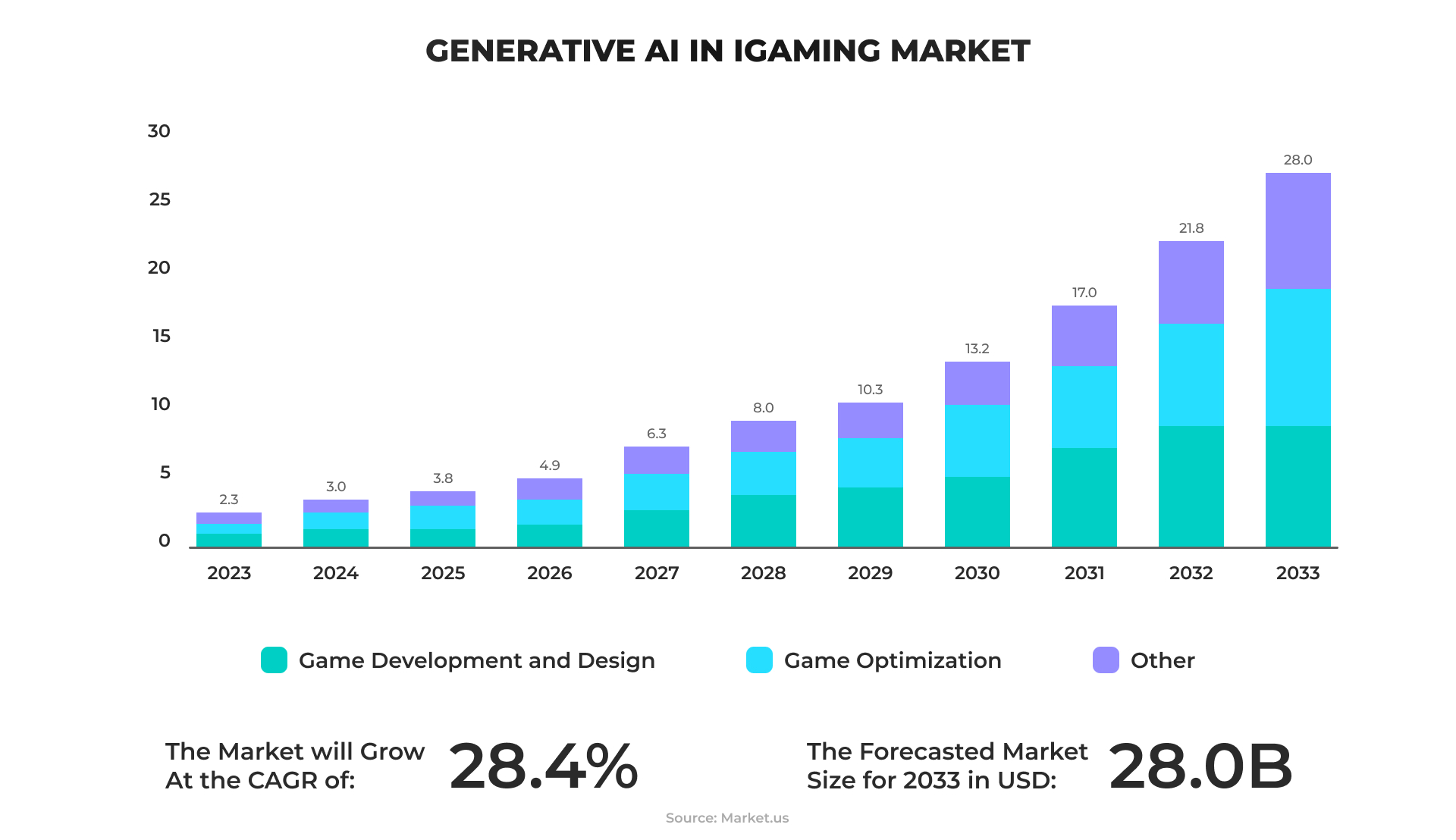
The trajectory is clear: AI adoption will deepen across every operational layer of iGaming over the next several years. The emerging use cases already attracting real investment include AI-assisted game design (accelerating concept and mechanics development), advanced player behavior modeling that goes beyond churn prediction to genuine preference forecasting, voice-enabled gaming interfaces, personalized live casino experiences, and AI-generated promotional assets at the speed of campaign cycles.
Machine learning in gaming is also enabling more sophisticated real-time risk management — not just flagging known patterns but identifying novel betting behaviors that might indicate match-fixing, coordinated abuse, or emerging exploit methods before they become systemic problems.
The operators who will extract the most from these capabilities are the ones building AI-ready infrastructure and data practices now, rather than retrofitting them later.
How to Successfully Integrate Generative AI Into an iGaming Platform
Implementation works when it’s treated as an ongoing process rather than a project with a finish line. A practical framework:
Start with clearly defined business goals — specific operational problems or growth opportunities, not “we should be using AI.” Identify the two or three use cases with the highest potential return: customer support automation, fraud detection, and marketing personalization consistently deliver the fastest results. Ensure data readiness before deployment, because even excellent models produce poor outputs from poor data. Build in human oversight for decisions involving compliance, player protection, and financial risk — these aren’t areas to fully automate. Measure against predefined KPIs from day one and treat the first deployment as a baseline to iterate from, not a finished product.
Building AI-Powered iGaming Products That Actually Work
AI creates genuine leverage across game production, player engagement, operational efficiency, and platform security — but only when it’s implemented by teams who understand both the technology and the specific dynamics of online gambling. Bolting on third-party tools without that context produces underwhelming results and integration headaches.
At Inkration, we build iGaming products that combine strong player experiences with scalable technology architecture. Our work spans game development, game art, casino content production, and platform integration — including emerging AI applications that are reshaping what operators can build. If you’re evaluating where AI fits into your platform roadmap, we’re worth talking to. You can start with our iGaming software development services to get a sense of how we approach it.
FAQ
What is generative AI in iGaming?
Generative AI in iGaming refers to systems that create content, generate human-like communication, model player behavior, and support automated decision-making within online gambling platforms — going beyond traditional analytics to actually produce new outputs.
How can generative AI be used in iGaming?
The main applications are personalization, content production, customer support, responsible gaming, fraud prevention, and marketing automation — each addressing a specific operational or revenue challenge.
How does AI improve player retention?
By analyzing behavior continuously to identify churn risk, predict what offers or content a player will respond to, and trigger personalized communications at the right moment — rather than relying on broad segmentation and static campaign schedules.
Is AI used in online casinos today?
Yes, widely. Fraud detection, recommendation engines, player analytics, AI-powered chatbots, and compliance monitoring are all in active use across major operators.
Can AI help with responsible gambling?
Yes. AI systems can detect behavioral patterns associated with gambling harm early and trigger interventions automatically — a more proactive approach than traditional self-exclusion tools.
What are the biggest challenges of implementing AI in iGaming?
The main ones are strategic clarity, system integration complexity, data quality, regulatory compliance across jurisdictions, and the pace of change in AI capabilities themselves.