July 9, 2026

Just a few years ago, online casinos were still dominated by traditional slots. Today, one title appears almost everywhere players look: the aviator game. What started as a simple multiplier game has become one of the biggest success stories in modern iGaming, spawning countless competitors and helping establish crash games as a mainstream casino category.
The reasons go beyond novelty. Aviator combines instant gameplay, social interaction, mobile-first design, and transparent game mechanics in a way that resonates with modern players. Instead of passively watching reels spin, players actively decide when to cash out, creating tension and engagement every few seconds.
For operators, developers, and game studios, Aviator also represents something larger — a shift in what players expect from online casino games. The success of crash mechanics suggests that the next generation of casino content will prioritize interaction, speed, and community just as much as graphics or bonus features.
What Makes Aviator Different from Traditional Slot Games
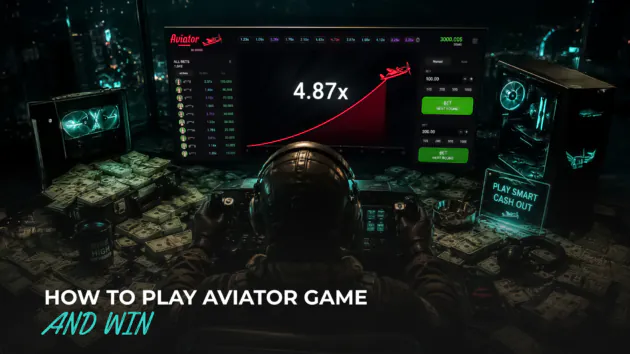
At first glance, Aviator looks almost too simple: players place a bet, watch an airplane climb as the multiplier increases, and decide when to cash out before the flight suddenly ends. If the plane flies away first, the entire wager is lost.
Those few seconds fundamentally change the experience compared to traditional slots.
Unlike slots, where outcomes are almost entirely passive after pressing Spin, the aviator casino game constantly asks players to make a decision. That single mechanic transforms waiting into participation.
Aviator vs. Traditional Slots
| Feature | Aviator | Traditional Slots |
| Gameplay | Real-time multiplier | Reel spins |
| Player decisions | Cash out whenever desired | Limited after spin |
| Round length | Usually under 20 seconds | Varies by slot |
| Social features | Live player feed, shared rounds, chat | Usually minimal |
| Pace | Continuous, fast | Moderate |
| Core mechanic | Rising multiplier | Symbol combinations |
The game’s appeal also comes from its accessibility. New players understand the rules within seconds, yet every round creates a new decision. That combination is much easier to learn than bonus-heavy slot games filled with expanding wilds, cascading reels, or dozens of paylines.
Crash game mechanics create constant tension
Strip everything away and one element powers the entire category: uncertainty you can act on. Every round starts identically, the multiplier climbs, and nobody knows when it stops. So every second, the player is running the same calculation — lock in a small win now, or hold for a bigger one and risk the whole stake. It’s high-risk high-reward gameplay distilled to a single escalating choice, and it produces continuous anticipation where slots produce occasional spikes.
The design supports both temperaments. Manual cash-out serves players who want their hands on the controls; the auto cash out option serves those who’d rather set a strategy and let it run. Layer in a multiplayer environment where everyone watches the same flight, and you get a game that generates its own atmosphere — hundreds of players sweating the same multiplier at once.
Feature comparison
| Mechanic | Business Impact |
| Manual cash out | Higher player interaction |
| Auto cash out option | Appeals to different play styles |
| Short rounds | More gameplay within the same session |
| Multiplayer environment | Stronger community feeling |
| Instant results | Faster feedback loop |
| Visible player activity | Higher social engagement |
Trust closes the loop. Many crash titles run on provably fair technology, letting players verify that a round’s outcome wasn’t manipulated after the fact. Most never check. But in a game where the house decides when the plane disappears, the ability to check has become one of the category’s most important trust signals.
5 Reasons Aviator Became Global Hit
The obvious answer to why Aviator is popular is that it’s fun. The more interesting answer is that it solved several problems traditional slots had struggled with for years.
1. It gives players meaningful decisions
Every round asks players one question: “When do you cash out?”
That choice creates agency without making the game difficult to understand. Players feel involved instead of simply watching outcomes unfold.
This balance between chance and decision-making is one of the biggest reasons why Aviator is the new slot for many audiences.
2. It fits perfectly into mobile gaming
Modern casino players increasingly play in short sessions throughout the day.
The Aviator interface was designed around that reality. Rounds last seconds, controls require a single tap, and the game works naturally on mobile devices. That aligns well with broader mobile casino gaming habits, where convenience often matters more than elaborate presentation.
3. It encourages player engagement
Slots are solitary; Aviator puts live bets, public cash-outs, and chat on the same screen as the game. That visible player engagement keeps a session feeling alive even between your own bets — you’re watching other people win and lose in real time, and that’s entertainment in itself.
4. The gameplay is fast
Aviator respects the player’s time. No loading screens, no ninety-second bonus animations. Complete rounds, back to back, all session long — a rhythm that matches broader online gambling trends where users expect immediacy from every digital product they touch.
5. It feels fresh without being complicated
While slot studios kept stacking features, Aviator went the other way and compressed everything into one escalating decision. That restraint is why it reads as fresh to veterans and approachable to first-timers simultaneously — a rare combination in this business.
How Streaming and Influencers Fueled Aviator’s Growth
Great mechanics alone rarely create global phenomena. In Aviator’s case, streaming culture played an equally important role.
As casino streaming grew across YouTube, Twitch, Kick, and regional platforms, crash games proved almost perfect for live audiences. Unlike slots, where viewers mostly wait for bonus rounds, Aviator creates suspense every few seconds.
Everyone watching sees exactly the same multiplier climb.
Everyone wonders whether the streamer will cash out.
Everyone reacts simultaneously when the plane disappears.
That shared tension makes the format naturally entertaining.
Built for creators
Short rounds, visible decision-making, dramatic swings, continuous pacing: Aviator delivers content that holds up across a four-hour broadcast without the creator manufacturing drama. The game generates its own cliffhangers, one flight at a time. That’s how casino influencers ended up introducing crash games to millions of viewers who’d never have found them organically.
Social proof accelerates adoption
People naturally become curious when they repeatedly encounter the same product. As more creators featured Aviator, players became familiar with the format before ever trying it themselves.
That visibility created a powerful network effect: more players meant larger communities, and larger communities generated more streaming content. More streaming attracted additional players.
Within a few years, the aviator gambling wave had graduated from a hit title to one of the defining casino game trends of the decade.

Future of Crash Games
Aviator’s success has already rewired how studios think about casino design. Nearly every major provider now ships some version of a crash casino game, each experimenting with themes, visuals, and multiplayer systems on top of a formula that has barely needed to change.
More social features
Community has become a competitive advantage.
Future online crash games are likely to include richer chat systems, tournaments, seasonal events, team competitions, and shared progression.
Rather than replacing slots, crash games increasingly complement them by offering more interactive sessions.
Greater personalization
Players are already split between manual play and automated strategies, and future products will widen that range with smarter auto cash-out configurations, custom interfaces, achievements, and session analytics that let players study their own behavior.
Integration beyond casinos
The multiplier game core is flexible enough that developers are already porting it into crypto gaming, free-to-play formats, social casino gaming, and branded entertainment — which makes crash mechanics interesting to studios that have nothing to do with real-money gambling.
Trust will remain essential
Provably fair verification, clear RTP disclosure, responsible gaming tools, and clean regulatory integration will only grow in importance as players get more sophisticated about how these games actually work.
If Aviator leaves one legacy, it’s proof that next generation casino games can beat decades-old formats by out-engaging them rather than out-featuring them.
Conclusion
Aviator didn’t win on technology — the tech is deliberately modest. It won by reading the room. Players wanted games that are learnable in seconds, native to mobile, social by default, and built around real decisions, and the aviator game delivered all four while the slot industry was still adding paylines.
But here’s the catch for anyone eyeing the category now: the simplicity is deceptive. Aviator looks easy to clone, and dozens of studios have learned the hard way that it isn’t. A crash title that actually competes needs balanced game math, multiplayer infrastructure that holds up under thousands of simultaneous cash-outs, a UX that stays readable at speed, regulatory compliance across markets, and a product identity strong enough to stand out in lobbies full of look-alikes. The mechanic is public. The execution is the moat.
If you’re planning to build your own crash title, Inkration helps operators and gaming businesses develop custom multiplayer crash experiences tailored to their brand, audience, and commercial goals. Learn more about our Crash Games Development services and discover how we can help bring the next generation of crash gaming to market.
More Article